


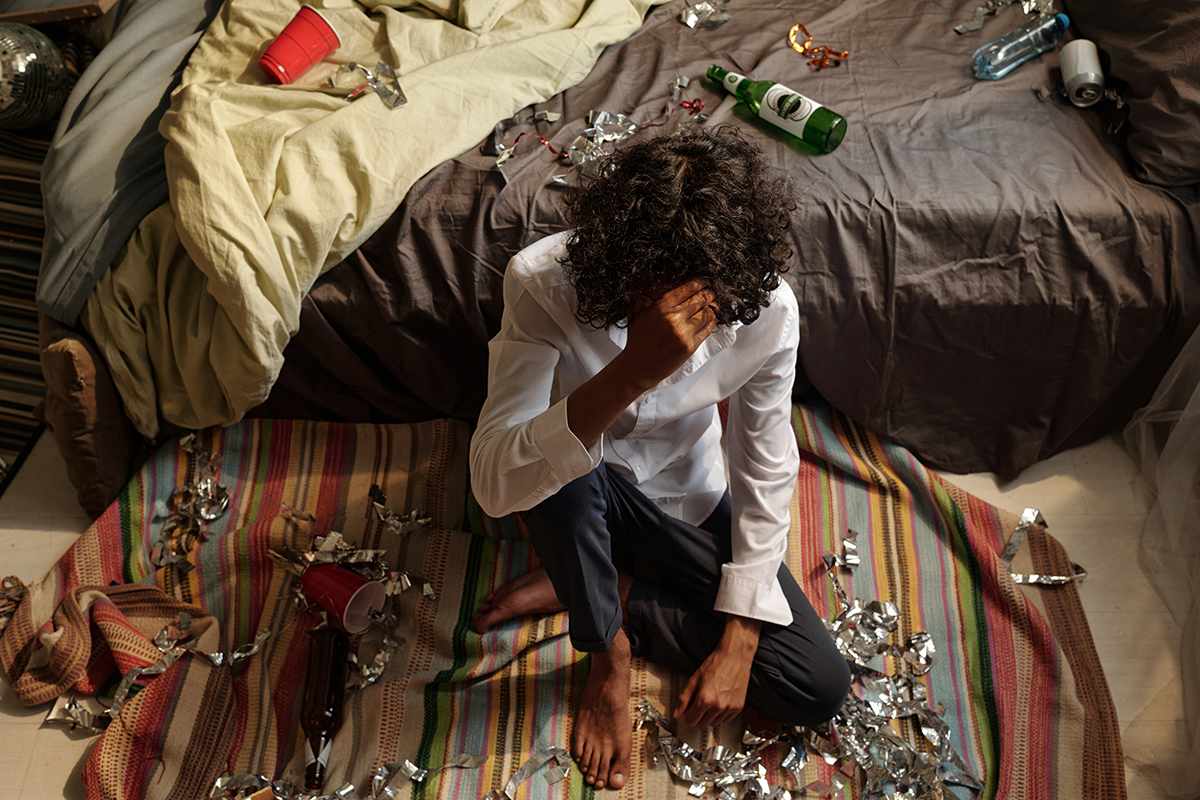
Hope & Hopeless: The Gift of Step One
There is a strange paradox at the heart of recovery: it begins not with hope, but with hopelessness.
Step One in the Fellowship of Alcoholics Anonymous says, “We admitted we were powerless over alcohol—that our lives had become unmanageable.” This admission isn’t theoretical. It isn’t poetic. It’s not a polite nod toward the idea that maybe things could be better. It is, in fact, the absolute death of any remaining hope that we can one day drink like normal people. It is the collapse of the fantasy that alcohol can still work for us.
Many come into the rooms of A.A. with pain and consequences trailing behind them. They may say the words of Step One—“I’m powerless”—but inwardly still harbor that quiet ember of hope: Maybe I can learn to control it. Maybe next time will be different. Maybe someday I’ll drink safely. This hope is what sends many of us back out. And for alcoholics like us, going back out is not just dangerous—it’s potentially fatal.
The Real Surrender
Step One calls for a surrender of two powerful beliefs that keep us spiritually sick:
-
The delusion that, in and of ourselves, we have the power to stop.
-
The belief that alcohol is our primary problem.
These two ideas are deeply ingrained. The first is our ego’s last defense: “I’ve got this.” But if we truly had the power to stop, we would have done so long ago. The second belief is trickier, because the bottle seems like the obvious culprit. But A.A. literature and experience teach us something deeper: alcohol is not the root—it is our solution. Until it stops working.
What’s Really Wrong With Me?
The Big Book says it clearly: “Selfishness—self-centeredness! That, we think, is the root of our troubles.” It goes on to describe how we are driven by a hundred forms of fear, self-delusion, self-seeking, and self-pity. These mental and emotional states—our twisted thinking—are what truly make our lives unmanageable. We reach for alcohol because, for a time, it relieves the anxiety, the pressure, the fear, and the constant hum of discontent in our souls. It becomes the thing we lean on. It’s not the alcohol that breaks us. It’s the thinking that leads us back to the drink again and again.
At my home group this past Monday, the topic was Step one. I shared that we must become hopeless. Not defeated by life itself, but hopeless that alcohol will ever work again. Hopeless that we can manage our lives on our own. Hopeless that we will ever have the power in and of ourselves to fix our brokenness.
And in that hopelessness—paradoxically—we find hope. Real hope. The kind that’s born from surrender. The kind that leads us to the rest of the Steps, to God (our only real solution), to each other, and to a new way of living.
So if you’re new, and you’re still holding on to that last glimmer of hope that maybe you can drink again someday, we lovingly offer this truth: that hope is the enemy of your recovery. Let it die. Because when you finally accept that it will never work for you again, you are ready to live. Step One is not a punishment—it is the beginning of freedom.
We surrender to win.
We don’t promise easy—but we do promise freedom.
In love & service,

Rick W.