


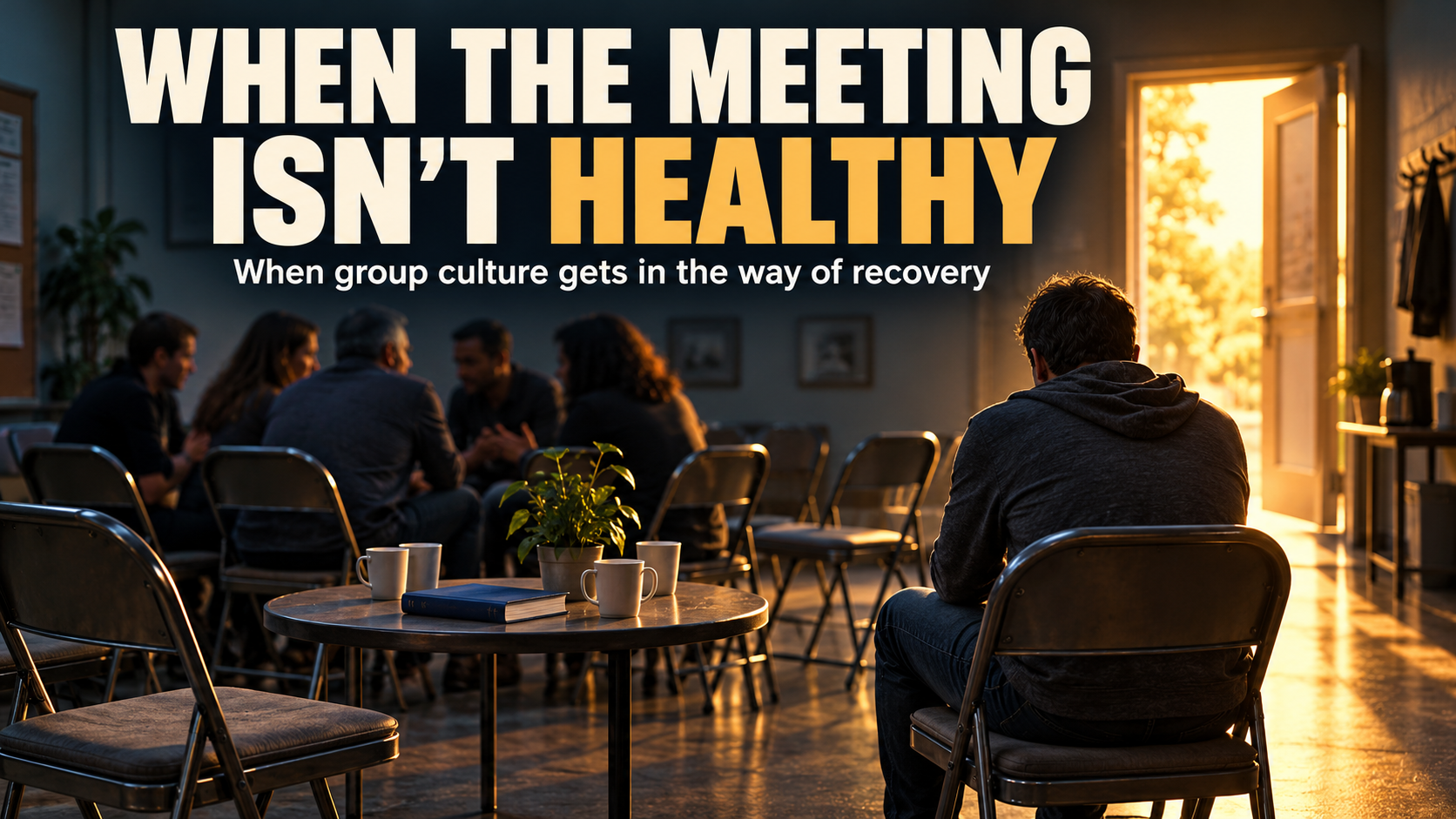
When the AA Meeting Isn’t Healthy
In my almost four decades of attending AA meetings, I have been to some incredibly spiritually healthy meetings, and then some that felt like something very different from that. It’s been my experience that groups can develop dysfunctional cultures just like families and organizations can.
We walk into Alcoholics Anonymous and often times find something different from what we have known: honesty instead of denial, connection instead of isolation, and spiritual principles instead of the exhausting business of managing everybody else.
But sometimes, familiar patterns follow us through the door. Control. Favoritism. Secrets. Fear of disagreement. Protecting influential people while questioning the people who raise concerns.
A meeting can have coffee, readings, laughter, and decades of sobriety represented and still develop an unhealthy culture.
Recognizing that possibility requires honesty. It also requires humility, because a meeting that challenges me is not necessarily a meeting that harms me.
Discomfort Isn’t Always Dysfunction
Sometimes, I dislike a meeting because somebody tells the truth I have been avoiding. Sometimes, a group conscience makes a reasonable decision that does not go my way.
Neither proves the group is unhealthy.
In “How It Works,” the Big Book describes the self-centered actor who wants to arrange everyone and everything. I can bring that same impulse into AA, expecting the group to follow my script.
The Twelve and Twelve’s discussion of Step Ten asks us to examine our emotional disturbances and our own responses. That is useful work when a meeting troubles me.
But identifying my reaction does not settle whether another person’s behavior was appropriate.
I can have resentment about something genuinely harmful. I can need inventory and boundaries simultaneously.
My responsibility for my response does not erase someone else’s responsibility for their conduct.
When Patterns Become the Culture
Every group experiences difficult personalities and occasional conflict. The deeper concern is what happens repeatedly and what the group permits.
Can members disagree without being ridiculed? Are newcomers welcomed into participation, or expected to remain silent? Do service positions rotate, or do certain people effectively own them?
What happens when someone says, “That behavior made me uncomfortable”?
A healthy group may respond imperfectly, but it can listen. An unhealthy culture makes raising the concern more dangerous than causing the problem.
Imagine a newcomer questioning a longtime member’s humiliating remarks. Instead of considering the remarks, people explain that the newcomer is oversensitive and needs more humility.
The group has just taught everyone something: some people are protected, and other people should be quiet.
When Experience Becomes Authority
Tradition Two places ultimate authority in a loving God expressed through the group conscience. Its essay in the Twelve and Twelve explores the difference between mature spiritual leadership and the determination to keep running things.
Experience matters. Longtime members can offer perspective that newer members desperately need.
But long-term sobriety time does not make anyone incapable of manipulation, intimidation, or error.
Tradition Twelve’s emphasis on “principles before personalities” applies to the beloved personality, too. Admiration becomes dangerous when it exempts someone from the principles everyone else is expected to practice.
Tradition Nine reinforces accountability through service. A service position carries responsibility; it does not confer ownership of the group. (aa.org)
When Spiritual Language Silences People
“Look at your part.”
“Pray for them.”
“Practice acceptance.”
Each can be useful guidance. Each can also become a way to end a conversation that needs to continue.
In “How It Works,” the Big Book directs us to examine our own mistakes. That instruction does not authorize me to conduct somebody else’s inventory whenever they question my behavior.
“Into Action” connects spiritual growth with acknowledging wrongs, making amends, and changing our conduct. Applied to group life, that suggests more than asking an injured member to become less upset.
The Step Eight discussion in the Twelve and Twelve likewise turns attention toward the harm we have caused and our willingness to repair relationships.
If our spiritual language consistently protects the person causing harm, we should examine how we are using it.
Unity Requires Honesty
Tradition One connects personal recovery with AA unity. But unity becomes fragile when members must conceal problems to preserve appearances.
The Twelve and Twelve presents the Traditions against the background of real struggles over power, belonging, money, and purpose. Conflict was something early AA had to learn to address.
Tradition Four gives groups considerable autonomy. Read alongside Tradition One, that freedom carries responsibility for how our choices affect others.
Tradition Three challenges exclusion, while Tradition Five brings us back to carrying the recovery message. A newcomer should not have to win a popularity contest before receiving it.
A.A.’s safety guidance specifically identifies bullying, sexual harassment, financial coercion, discrimination, and pressure concerning medical treatment or religious beliefs as concerns groups have addressed. These deserve attention, not automatic dismissal as personality conflicts. (aa.org)
Practice the Program Together
The answer is neither to condemn every imperfect group nor to excuse every harmful pattern.
It is to bring the same willingness to group life that we bring to personal recovery.
First, get specific. “This group is toxic” offers little direction. “Members are being mocked when they question financial decisions” identifies behavior we can examine.
Second, seek perspective from a trustworthy sponsor or experienced member outside the immediate conflict. The Step Five discussion in the Twelve and Twelve reminds us of the limitations of trying to understand ourselves alone.
Third, use the group conscience and consider a group inventory. Are decisions transparent? Can people participate? Do we address concerns consistently? An experienced facilitator from outside the group may help.
A.A.’s safety guidelines recommend discussing safety through group inventory and drawing on shared experience available through the service structure. They also make clear that anonymity does not protect criminal behavior from appropriate action. (aa.org)
Finally, recognize the limits of your responsibility.
You can participate honestly without becoming responsible for rescuing the group. You can find another meeting while continuing your recovery. Where safety is threatened, you do not need to wait for a business meeting to protect yourself.
The Big Book’s “A Vision for You” describes fellowship, connection, and a shared future. That promise deserves practical expression in how we treat people.
A healthy meeting will still contain imperfect alcoholics.
Its strength lies in what happens when those imperfections cause harm: people can speak, the group can listen, and everyone, including its most respected members can remain teachable.
In love & service,
